

As April kicks off, global financial markets are on edge. Although last week was relatively uneventful from a volatility standpoint, the calm could soon give way to turbulence. With President Trump’s reciprocal tariffs poised to take effect midweek, a new chapter in the global trade story is about to begin—and the implications span far beyond just currencies.
This week’s developments are expected to influence everything from equities and bonds to oil, gold, and industrial metals. For investors and traders, staying ahead of the curve is essential.
UK: Economic Fog Lingers After the Spring Statement
The UK Spring Statement made headlines but had little immediate impact on markets. That said, it painted a sobering picture for 2025 and beyond. Economic growth forecasts have been revised sharply lower, and medium-term inflation expectations are on the rise. This could force the government into raising taxes later in the year, especially as the Autumn
Budget looms.
Equity investors in UK-focused sectors—especially retail and housing—should prepare for a potentially tougher fiscal backdrop. The bond market may also reprice expectations based on looming fiscal tightening.
The Tariff Countdown: A Tipping Point for Global Trade and Investment

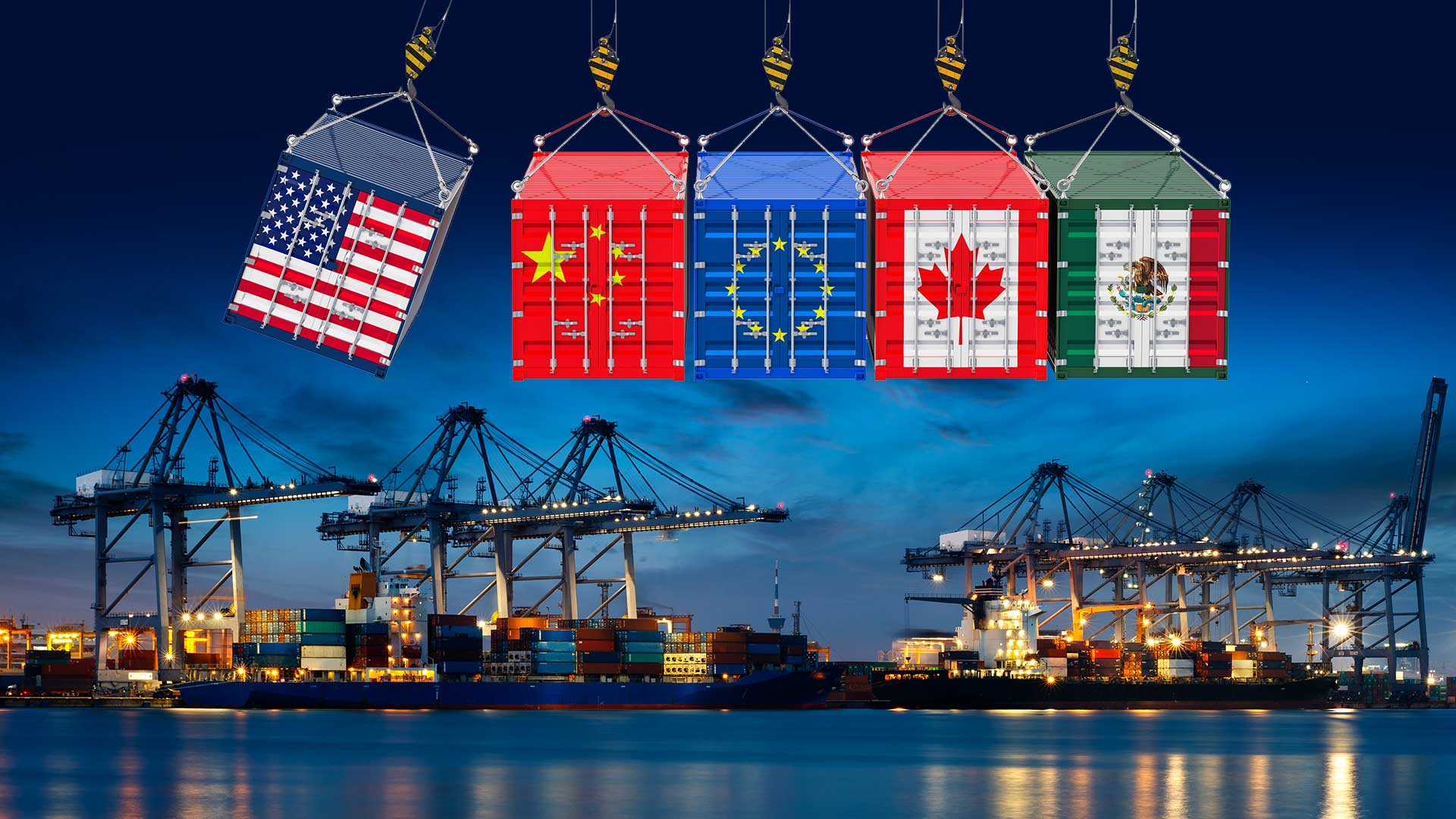
The main event this week is undoubtedly the tariff countdown. President Trump’s plan to impose reciprocal tariffs begins on Wednesday, April 2nd. In effect, the U.S. will match tariffs levied by foreign countries on American exports, a move that could reignite trade tensions with key partners like the EU and China.
Markets have largely priced in the anticipated tariff structure, but unexpected adjustments could send ripples through global indices, commodity markets, and risk assets. For example:
- Stock Markets: Export-heavy sectors such as tech, autos, and agriculture may face renewed pressure.
- Oil and Commodities: Tariffs can weaken global demand forecasts, pushing crude oil and copper prices lower.
- Gold: As uncertainty rises, gold could benefit from safe-haven flows.
Tomorrow is being called “Liberation Day” by Trump, but for markets, it might feel more like “Judgment Day.”
Key Global Data Points That Could Move Markets
Monday: Inflation and Manufacturing in Focus
Germany releases its Flash CPI, expected to fall to 2.2%. Softer inflation in Europe could ease pressure on the European Central Bank, possibly lifting stocks. In the U.S., the Chicago PMI is forecast to decline to 45.0, signaling ongoing manufacturing weakness.
Lower readings across these indicators may reinforce a “lower-for-longer” interest rate environment—supportive for equities but potentially bearish for oil and industrial metals.
Tuesday: Australia Holds Steady, Europe Provides More Clues
The Reserve Bank of Australia is expected to keep interest rates at 4.1%. This should calm equity markets down under, but commodity-linked stocks may still feel the global trade pinch.
In the Eurozone, a mix of manufacturing PMI, unemployment, and flash CPI data will give further clues on economic momentum. Markets will be particularly attuned to industrial production data, as this will impact global demand forecasts for metals like aluminum and zinc.
Wednesday: The Big Tariff Countdown Begins
This is the day investors have been anticipating—and dreading. Trump’s tariffs come into effect, and the fallout will likely influence:
- Global Indices: Look for movements in the S&P 500, FTSE 100, and DAX.
- Commodities: Crude oil, soybeans, and copper could react swiftly.
- Volatility Index (VIX): Expect a spike if tensions escalate.
Also on the docket is the U.S. ADP employment report, forecast at 120k. While not the headline of the day, it will still provide insight into labor market resilience.
Thursday: Services PMI and ECB Minutes
Services sector data from the U.S., UK, and Eurozone will be released. While minimal revisions are expected, markets will be watching for signs of slowing demand, especially in consumer services and tech.
The ECB minutes could impact banking and bond sectors if they reveal a shift in the rate hike outlook. Lower-for-longer sentiment might lift equities but weigh on bank earnings forecasts.
Friday: U.S. Jobs Report – Make or Break Moment
The U.S. Non-Farm Payrolls report is forecast at 140k, down from 151k last month. A large deviation—either way—could send shockwaves through equity and bond markets alike.
A strong jobs report may reinforce confidence in the U.S. recovery, lifting stocks and pressuring gold. A weak print, on the other hand, could prompt a flight to safety, boosting Treasuries and precious metals.
Markets to Watch During the Tariff Countdown
| Market/Asset | Why It Matters |
|---|---|
| U.S. Equities | Sensitive to trade tensions, especially tech and industrials |
| Oil (WTI, Brent) | Demand-sensitive; tariffs may signal global slowdown |
| Gold | Safe-haven demand likely to rise amid uncertainty |
| Copper & Metals | Heavily tied to industrial activity and trade flow |
| VIX Index | Indicator of market volatility; expected to climb midweek |
Investor Checklist for the Week
- Watch for Tariff Headlines: Sudden changes in trade policy can cause ripple effects.
- Diversify Holdings: Don’t be overly exposed to trade-sensitive sectors.
- Use Volatility to Your Advantage: Consider options or inverse ETFs if appropriate.
- Reassess Commodity Exposure: Especially in oil and industrial metals.
FAQs: Tariff Countdown and Market Impact
1. How will the tariff countdown affect stocks and commodities?
Higher tariffs can depress trade activity and global growth, leading to pressure on stocks and demand-sensitive commodities like oil and copper.
2. Why is gold expected to rise this week?
In uncertain environments, investors typically move into safe havens like gold, especially when geopolitical risk is elevated.
3. Are emerging markets at risk?
Yes. Many emerging markets are heavily dependent on exports. Trade disruptions can hurt their equity and bond markets.
4. Could this start another trade war?
If retaliatory tariffs follow, it could escalate. Markets are pricing in moderate risk, but a full-scale trade war would trigger broader selloffs.
5. Will the U.S. jobs report affect commodities?
Yes. A weak report could suggest slowing demand for energy and metals, while a strong one might boost sentiment temporarily.
6. What sectors are safest right now?
Defensive sectors like utilities and healthcare tend to perform better during volatility and economic uncertainty.
What Tariff Risk Means for a Long-Term Portfolio
The checklist above is written for the week in question. The harder question, and the one that matters more to most of the people reading this, is what — if anything — a trade dispute should change about a portfolio built for the next decade.
Diversification is geographic and currency-based, not just sectoral. Avoiding trade-sensitive sectors is the obvious response, and it is only half of one. Tariffs are a dispute between economies, and their effects land unevenly across countries, currencies and supply chains rather than neatly across industry labels. A portfolio concentrated in one economy is exposed to that economy's trade policy and to the retaliation it attracts, whatever mix of sectors sits inside it.
Policy is reversible, and that cuts both ways. Tariff schedules are political instruments. They can be widened, narrowed, suspended or traded away, sometimes quickly. An investor who repositions a long-term portfolio decisively around an announced measure is taking a view not on companies or economies but on the durability of a political decision — a considerably harder thing to forecast, and one where being right about the policy and wrong about the timing produces the same result as being wrong.
Distinguish the shock from the cycle. Markets price anticipated events in advance, as the article notes above. Much of what moves prices around a scheduled measure is the gap between what was expected and what arrives, not the measure itself. That gap is, by definition, not knowable beforehand.
How a Tariff Actually Reaches a Share Price
The table above says export-heavy sectors "may face renewed pressure", which is true but skips the machinery. A tariff is a tax collected at the border from the importer, not from the foreign producer. So the first thing that happens is that somebody in the importing country pays more for the same goods. What happens next is a commercial negotiation with three possible outcomes, and the share-price effect depends entirely on which one prevails.
The importer can absorb the cost, in which case its gross margin falls and its own earnings take the hit. It can pass the cost to customers, in which case the margin survives but volumes usually do not, because a higher price sells fewer units. Or the foreign supplier can cut its price to keep the order, in which case the exporter's margin absorbs the tariff and the pressure lands abroad. In practice the outcome is a split, and where it falls depends on how substitutable the product is. A commodity input with many available sources gives the buyer leverage and pushes the cost back onto the exporter; a component with one qualified supplier does the opposite.
This is why the sector label is a poor guide. Two companies filed under "autos" can sit on opposite sides of that negotiation depending on where they buy, where they sell and whether their customers have an alternative. It is also why the effect on commodities runs through demand expectations rather than through the tariff itself: copper is not being taxed, but if the factories that consume it expect to build fewer units, the forward demand curve moves before any tariff is collected. Our companion piece on how trade wars are affecting the market traces the same mechanism across a longer dispute rather than a single announcement.
Before repositioning, the useful test is not whether the news is significant but whether the exposure exists in your portfolio in a size that matters, and whether the round trip — dealing charges, spreads, currency conversion, any tax on the gain — costs less than the harm you are trying to avoid. Where the discomfort is with volatility rather than with the analysis, the adjustment that helps is to the overall level of risk, not to the contents in response to one event.
A Note for Expat and Cross-Border Investors
For internationally mobile investors, trade disputes often arrive through the currency door rather than the equity one. If you earn in one currency, spend in a second and hold assets denominated in a third, a move in exchange rates driven by trade policy can affect your real position more than the movement in the underlying markets. It is worth knowing, before a volatile week rather than during it, how much of your near-term spending is already matched to the currency you spend in, and how long you could go without selling an asset at a bad moment to meet a bill.
The same logic applies to income drawn from a portfolio. Where withdrawals are needed within the next year or two, the relevant protection is usually holding that money in a form and a currency that does not have to be sold into a falling market, rather than attempting to trade around the event.
Risk warning: the value of investments and any income from them can fall as well as rise, and you may get back less than you invested. Commodities and currencies can be particularly volatile. Derivatives and leveraged or inverse products, mentioned in the checklist above, carry risks that are not suitable for all investors, including the possibility of losses exceeding the amount originally committed; they should only be used where you fully understand the instrument and it is appropriate for your circumstances. Past performance is not a guide to future performance. This article is general commentary written at the date shown and is not a personal recommendation.
Stay Sharp During the Tariff Countdown
From commodities to equities, every corner of the financial market will be impacted by this week’s tariff countdown and U.S. labor data. The decisions made in Washington—and how global leaders respond—will shape investment strategies for weeks to come.
Need help navigating this high-stakes week? The Global Investments team is here to guide you with expert analysis and tailored portfolio strategies.
This article is for general information only and does not constitute financial, legal or tax advice, a personal recommendation, or an offer to buy or sell any investment. Rules, prices and regulations change; verify current requirements with a qualified adviser before acting.