

Residency planning has become an active part of wealth structuring for internationally mobile families. The combination of tightening immigration policies in established markets, rising tax pressure across the EU and UK, and increased scrutiny of cross-border wealth has shifted residency from a lifestyle decision into a core component of long-term planning.
Real estate–linked programs sit at the centre of this trend. Unlike donation-based or fund-based routes, where capital is either contributed or locked into illiquid vehicles, property investment preserves ownership, retains balance-sheet value, and produces optional income. For most high-net-worth investors, that combination remains the most defensible use of capital tied to a residency outcome.
However, the landscape has changed materially over the past 24 months. Spain has closed its program. Portugal has removed real estate as a qualifying route. Greece has tripled minimum thresholds in prime zones. New programs have launched in Hungary and the Maldives, while the UAE and Mauritius have continued to attract record application volumes.
The implication is straightforward: the menu of credible property-linked residency programs in 2026 is narrower, more regulated, and more strategically differentiated than at any point in the last decade.
This guide breaks down the jurisdictions that still offer property-linked residency in 2026, the structural differences between them, and the practical considerations that determine which program aligns with a given investor profile.
For tailored guidance, schedule a confidential consultation to ensure your residency planning is structured to align with your broader wealth, tax, and succession objectives.
Why Residency by Investment Through Real Estate, and Why Now
Most investors evaluating residency by investment through real estate programs begin with the wrong question. The relevant question is not "which program is cheapest?" but "which program produces the legal, tax, and mobility outcome I actually need?"
Property-linked programs sit in a specific position within the broader residency-by-investment market. They typically deliver:
- A **tangible asset **that can appreciate, generate rental income, and be sold within defined holding periods
- A clear legal basis for residency tied to verifiable ownership rather than discretionary government approval
- A pathway to permanent residency or citizenship in many jurisdictions, subject to defined timelines and integration requirements
- Inclusion of immediate family members under a single application in most cases
The trade-off is concentration risk. A residency permit tied to a single property in a single jurisdiction creates exposure to local market cycles, currency, and regulatory change.
The correct way to evaluate any program is to assess the property as a standalone investment first, and the residency benefit second. Where the property would not be a sound investment on its own merits, the residency outcome rarely justifies the capital commitment.
The 2026 Landscape: What Changed
Three structural shifts define the 2026 environment.
Real estate routes have been removed from several established programs.
Portugal eliminated property as a qualifying investment under Law 56/2023, effective October 2023. Spain terminated its Golden Visa entirely on 3 April 2025 under Organic Law 1/2025.
Hungary, despite initial 2024 plans for a €500,000 direct real estate route, abolished that option in January 2025 before it was ever implemented. The Hungarian program now operates only through real estate fund units (€250,000 minimum) or a €1 million donation.
Thresholds have risen in popular jurisdictions.
Greece's tier-based reform (effective 31 August 2024) raised minimums to €800,000 in prime zones — Attica, Thessaloniki, Mykonos, Santorini, and islands with more than 3,100 residents — and €400,000 elsewhere.
The €250,000 entry point survives only for properties converted from commercial to residential use or for the restoration of listed heritage buildings.
Compliance has tightened across the board.
Cyprus raised its minimum secured annual income requirement to €50,000 in 2023 and removed parents from family eligibility. Mauritius will increase registration duty for non-citizens from 5% to 10% from July 2026.
Greek authorities issued Circular 1/2026 in April 2026, signalling **stricter enforcement **against schemes designed to artificially reduce reported investment values.
The direction of travel is consistent: programs that remain open are tightening, not loosening, and authorities are increasingly focused on substance over form.
Jurisdiction-by-Jurisdiction Analysis
United Arab Emirates: The Highest-Volume Property-Linked Program Globally
The UAE Golden Visa is the **most active property-linked residency program in the world **by application volume.
Dubai Land Department data shows 4,218 investors secured residency through real estate purchases in Q1 2026 alone, a 34.7% year-on-year increase.
The structure is straightforward:
- AED 2 million (approximately USD 545,000) in qualifying property delivers a 10-year renewable Golden Visa
- AED 750,000 (approximately USD 204,000) delivers a 2-year renewable investor visa
- Property must be in a designated freehold zone, registered with the Dubai Land Department
- Off-plan, mortgaged (with bank NOC), and multiple-property combinations all qualify
- The threshold is based on the DLD-recorded valuation, not the down payment or purchase price
The structural advantages are significant. There is no minimum stay requirement, no personal income tax, no capital gains tax on property, and the visa permits family sponsorship, including spouse, children of any age, and parents.
The UAE has an extensive network of double taxation agreements, and Golden Visa holders can transition from employer-sponsored visas to self-sponsored status, simplifying long-term residency planning.
The trade-offs are also clear. The UAE is not in the Schengen Area, so the visa does not provide European mobility. The property market remains cyclical, with prime Dubai districts experiencing rapid appreciation that has raised concerns about overheating.
The AED 2 million threshold has remained unchanged since the program's expansion in 2022, and an upward revision in the medium term would be consistent with the trajectory of comparable programs.
The UAE program is the strongest fit for investors prioritising tax efficiency, regional access (Africa, South Asia, MENA), and flexibility. It is not a substitute for European residency.
Greece: Still the Most Accessible EU Property Route, but Materially Restructured
Greece is now the only EU member state offering Schengen-area residency through direct real estate purchase at investment levels below €500,000.
The program operates under a three-tier zone system following the August 2024 reform:
| Tier | Minimum Investment | Locations | Conditions |
|---|---|---|---|
| Zone A | €800,000 | Attica (incl. Athens), Thessaloniki, Mykonos, Santorini, islands >3,100 residents | Single property, minimum 120 sqm |
| Zone B | €400,000 | All other regions of Greece | Single property, minimum 120 sqm |
| Zone C | €250,000 | Anywhere in Greece | Conversion of commercial to residential use, or restoration of listed heritage buildings |
The core program features remain attractive: a 5-year renewable residence permit, no minimum stay requirement, family inclusion (spouse, children up to 21, parents of both spouses), and Schengen mobility.
Citizenship is available after seven years, but requires substantive residence (183 days per year), language proficiency, and integration testing — meaning the program functions primarily as a long-term residency tool rather than an accelerated citizenship route.
Greek property fundamentals are supportive. The Bank of Greece reported a 7.7% year-on-year price increase in the broader market in late 2025, and rental yields range from 4–6% in major cities and up to 10% in tourist areas.
However, the new zone thresholds have effectively closed Athens and the popular islands to the mid-tier investor, pushing demand toward secondary cities and conversion projects.
Circular 1/2026, issued by the Ministry of Migration and Asylum in April 2026, has tightened enforcement on structures designed to artificially reduce reported investment values.** **
Schemes involving the return of funds to investors or undervalued contracts may now trigger AML investigation and revocation of permits.
Greece remains the entry point of choice for EU residency through property, but only the €250,000 conversion route preserves the original cost-benefit profile. For Athens or premium islands, the €800,000 threshold demands a genuine evaluation of the property as an investment, not as a residency vehicle.
Cyprus: A Permanent Residency Permit at a Defined Threshold
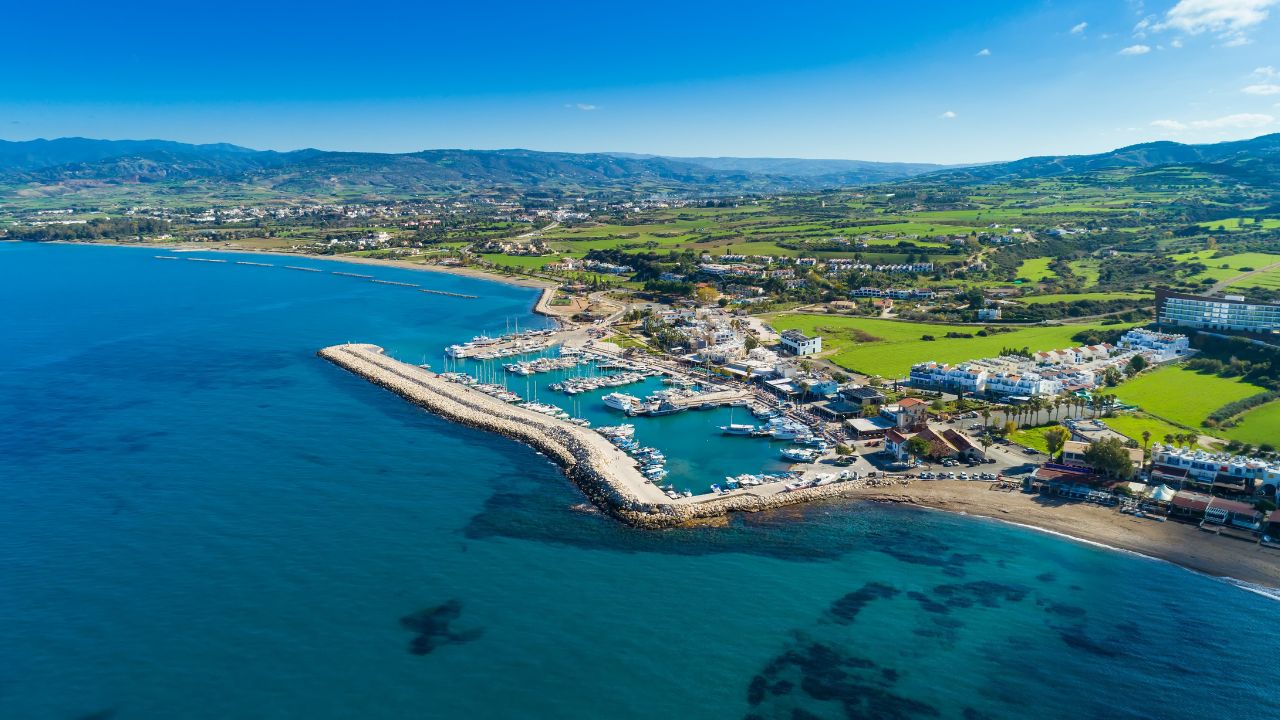
Cyprus operates a fast-track permanent residency program under Regulation 6(2) of the Aliens and Immigration Regulations.
The structure is among the most straightforward in Europe:
- €300,000 minimum investment (plus VAT) in new residential property purchased from a developer, or in commercial property, fund units, or shares in a Cypriot company with at least five employees
- €50,000 minimum secured annual income from sources outside Cyprus, with additional thresholds of €15,000 for spouse and €10,000 per dependent child
- Permanent residency status with no expiry, though the residence card is renewed every 10 years
- One physical visit to Cyprus is required every two years to maintain status
- Citizenship available after eight years of legal residence
The 2023 policy revision narrowed the family eligibility scope: parents and parents-in-law are no longer included, and adult children aged 18–25 must file separate applications.
Processing time runs approximately 6–9 months, with most of that period devoted to due diligence.
Cyprus is not yet in the Schengen Area, which is the program's most material limitation. The country has an active application under review, and accession is widely anticipated though not confirmed. Until that point, a Cyprus permit does not deliver Schengen mobility, which separates it sharply from Greece, Malta, and Portugal in practical terms.
The corporate tax rate of 12.5% and the non-domiciled tax regime make Cyprus particularly attractive for investors who intend to relocate substantively. Non-domiciled residents are generally exempt from the Special Defence Contribution on dividends, and there is no inheritance or wealth tax.
Cyprus is best suited to investors who value tax efficiency and a permanent residency outcome at a defined cost, and who do not require immediate Schengen access. The €50,000 income requirement is structural, not a formality, and must be substantiated annually.
Malta: Permanent Residency in an EU Member State, with Layered Costs
The Malta Permanent Residence Programme (MPRP), updated in July 2025, offers** indefinite permanent residency through a combination of property, government contribution, donation, and capital threshold** requirements.
The current structure:
- Property purchase from €375,000 (anywhere in Malta or Gozo), or rental from €14,000 per year
- €37,000 government contribution (the same whether buying or renting)
- €2,000 donation to an approved Maltese NGO
- €60,000 administrative fee
- €500,000 in capital assets (of which €150,000 must be liquid), or alternatively €650,000 with €75,000 liquid
The all-in cost on the rental route is approximately €169,000 plus rent; on the purchase route, approximately €474,000 plus property cost.
The qualifying property must be held for five years, after which the threshold no longer applies, but a Maltese residential address remains required.
Malta's structural advantages are real. The program delivers immediate permanent residency, includes up to four generations in a single application (spouse, children, parents, grandparents), and provides Schengen access.
Malta operates a remittance-based tax system: foreign-sourced income not remitted to Malta is not taxed. There is no inheritance tax, no wealth tax, and no property tax.
Two factors require scrutiny. First, due diligence is rigorous — Residency Malta operates a four-tier vetting process, and approximately 10% of applications are rejected. Second, the program excludes nationals of, or those with close ties to, sanctioned jurisdictions (currently including Russia, Belarus, Iran, North Korea, and several others).
Malta is the most family-comprehensive EU residency program available, with the broadest dependant inclusion and immediate permanent status. The cost structure is layered and requires careful budgeting beyond the headline property figure.
Mauritius: An English-Speaking Jurisdiction with Lifetime Residency

Mauritius has emerged as a credible alternative for investors seeking residency outside Europe and the Gulf. The program operates through five Economic Development Board–approved schemes: Property Development Scheme (PDS), Real Estate Scheme (RES), Integrated Resort Scheme (IRS), Smart City Scheme (SCS), and Invest Hotel Scheme (IHS), plus Ground+2 apartments.
Key parameters:
- USD 375,000 minimum investment in an approved scheme delivers a residence permit valid for as long as the property is owned
- Family coverage extends to spouse, children up to 24, and dependent parents
- No minimum stay requirement — one day per year is sufficient to maintain status
- Permanent residency available after meeting income or investment thresholds (20-year permits)
- Citizenship possible through naturalisation, with an accelerated route for investments of USD 500,000+
The tax position is genuinely attractive. Mauritius applies a** 15% flat tax on residents** (those who spend 183+ days), no inheritance tax, no wealth tax, and no capital gains tax on PDS/IRS sales.
The country is English- and French-speaking, has a developed banking sector, and operates an extensive double taxation treaty network.
A material change is** taking effect from 1 July 2026: registration duty and land transfer tax for non-citizens will rise from 5% to 10% on both purchase and resale of EDB-scheme properties**. Investors evaluating Mauritius should factor this into both acquisition and exit costs.
Rental yields in prime areas (Grand Baie, Tamarin, Black River) range from 6–10%, supported by tourism demand and a growing expatriate base.
Mauritius is the strongest non-EU, non-Gulf option for investors seeking a stable, English-speaking jurisdiction with lifetime residency tied to a tangible asset. The July 2026 duty increase materially raises the cost of acquisition for transactions completed after that date.
Turkey: Citizenship-Linked, with a Lower Residency Tier
Turkey offers two distinct property-linked routes that should not be confused.
Citizenship by investment requires a minimum USD 400,000 real estate purchase, held for three years, with the value verified through the Turkish government's GEDAŞ (Real Estate Valuation Center) system.
Upon completion, applicants and their families can secure full Turkish citizenship within 3–6 months. The Turkish passport offers visa-free or visa-on-arrival access to approximately 113–120 destinations and qualifies holders for the US E-2 Treaty Investor Visa.
Real estate residency requires a minimum USD 200,000 property value (raised from previous lower thresholds), with the value declared on the title deed (Tapu) verified against the Central Bank's exchange rate on the day of purchase. This delivers a renewable short-term residence permit but no automatic path to citizenship.
The 2026 enforcement environment in Turkey has tightened materially. The GEDAŞ valuation system has closed loopholes that previously allowed undervaluation on title deeds. AML scrutiny on source-of-funds documentation has intensified, and applicants must obtain a Foreign Exchange Purchase Certificate (DAB) demonstrating that funds entered the Turkish banking system in foreign currency.
The currency dimension is structural. Property prices in prime Istanbul districts are effectively USD-pegged, but the legal investment is denominated in Turkish Lira via the central bank conversion. This creates documentation complexity that requires careful execution.
Turkey's value lies in its citizenship route, not its residency route. For investors specifically seeking a second passport with E-2 access to the US, Turkey is structurally compelling. For pure residency, the program offers less than Greece, Cyprus, or the UAE.
For tailored guidance on selecting the right jurisdiction, schedule a confidential consultation.
Programs That Should Be Approached With Caution
Portugal: No Longer a Property-Linked Program
Portugal's Golden Visa remains active but no longer accepts real estate investment in any form. Funds with direct or indirect real estate exposure are also excluded.
The current routes are:
- €500,000 in a qualifying CMVM-regulated investment fund (no real estate exposure)
- €250,000 cultural heritage donation
- Job creation routes
- €500,000 scientific research contribution
The program retains some of its strengths — minimal stay requirement (seven days per year on average) and full Schengen access — but it is no longer relevant for investors seeking a property-linked outcome.
Hungary: Theoretically Available, Practically Limited
The Hungary Guest Investor Programme, reintroduced in 2024, was originally designed to include a €500,000 direct real estate option. That option was removed before implementation.
The remaining property-adjacent route is a €250,000 minimum investment in a real estate fund regulated by the Hungarian National Bank, with at least 40% of fund assets in Hungarian residential property and a five-year holding period.

As of late 2025, only a small number of qualified funds were operationally available, which limits practical accessibility. The program offers a 10-year residence permit, renewable once, with permanent residency available after three years and citizenship possible after eight years (with language and integration testing).
The program's operational stability has come under question, with limited fund availability and the abrupt removal of the original real estate route raising concerns about long-term predictability. Hungary's program sits on the watch list rather than the recommended list for 2026.
Spain: Closed to New Applicants
**Spain's Golden Visa was terminated on April 3, 2025, **under Organic Law 1/2025.
Existing visa holders retain their status and renewal rights, but no new applications are accepted. Investors seeking residency in Spain must now use the Non-Lucrative Visa (passive income), Digital Nomad Visa (remote workers), or Entrepreneur Visa routes.
None of these is a property-linked program.
Comparative Summary: Property-Linked Residency Programs in 2026
| Jurisdiction | Minimum Property Investment | Status Granted | Family Inclusion | Schengen Access | Stay Requirement | Path to Citizenship |
|---|---|---|---|---|---|---|
| UAE (Dubai) | AED 2,000,000 (~USD 545,000) | 10-year renewable | Spouse, all children, parents | No | None | Not available |
| Greece | €250,000 (conversions) / €400,000 / €800,000 | 5-year renewable | Spouse, children to 21, parents | Yes | None | After 7 years (with substantive residence) |
| Cyprus | €300,000 (+VAT) | Permanent (lifetime) | Spouse, children to 18 (extended to 25 with conditions) | Pending Schengen accession | Visit every 2 years | After 8 years |
| Malta | €375,000 + ~€100k in fees and contributions | Permanent (immediate) | Spouse, children, parents, grandparents | Yes | None mandated | After 5+ years (subject to residence) |
| Mauritius | USD 375,000 | Lifetime (tied to ownership) | Spouse, children to 24, parents | No | One day per year | Accelerated for USD 500k+ |
| Turkey (residency) | USD 200,000 | 1-year renewable | Spouse, children | No | Required for renewal | Standard naturalisation |
| Turkey (citizenship) | USD 400,000 | Citizenship in 3–6 months | Spouse, children under 18 | No | None | Immediate |
****Figures reflect program rules as published by the relevant national authorities and major industry sources as of April 2026. All figures should be verified against current government documentation before any investment decision.
Structural Considerations Beyond the Headline Threshold
The minimum investment figure is the easiest number to compare and the least useful in isolation.
Five additional factors determine actual outcomes:
- Total all-in cost: Headline figures exclude taxes, government fees, legal costs, and ongoing compliance. Malta's program, for example, requires approximately €100,000 in fees and contributions on top of the property investment. Mauritius's 10% non-citizen registration duty (effective July 2026) materially shifts the acquisition economics.
- Holding period and exit conditions: Programs typically require the qualifying investment to be maintained for a defined period — five years in most EU jurisdictions, three years in Turkey, indefinite in the UAE, while the visa is active. Selling early triggers loss of residency status. Some programs (Cyprus, Malta) require ongoing demonstration of investment maintenance even after permanent status is granted.
- Tax residency consequences: Obtaining a residency permit does not automatically create tax residency, but spending more than 183 days (or other treaty thresholds) typically does. Many investors structure programs to provide legal residency without tax residency, which requires careful coordination with existing tax planning. The UAE, Mauritius, and Cyprus all offer non-domiciled or territorial regimes that reward this approach when properly structured.
- Pathway alignment: Some investors want a long-term base. Others want optionality without relocation. Others want a route to citizenship. The program selected should reflect the actual end objective, not the lowest entry cost. Greece offers excellent residency but a slow citizenship pathway. Turkey offers fast citizenship but limited mobility. Malta offers immediate permanent status, but at a higher all-in cost.
- Property as a standalone investment: Where the underlying property would not stand on its own merits, the residency benefit rarely justifies the capital. The most successful applications combine a residency outcome with an asset that the investor would have considered acquiring independently — whether for rental yield, capital appreciation, family use, or portfolio diversification.
Implementation Framework
A practical decision sequence for evaluating property-linked residency in 2026:
Define the Objective
Tax base, second home, citizenship pathway, mobility, or pure optionality — each leads to different jurisdictions.
Assess Existing Exposure
Current tax residency, citizenship, and treaty positions determine which programs are additive and which create complications.
Stress-Test the Property as an Investment
Independent of residency, would the asset hold value, generate yield, and remain saleable in 5–10 years?
Quantify the All-In Cost
Not the headline threshold, but total acquisition cost including taxes, fees, contributions, and legal expenses, plus annual maintenance costs.
Evaluate Compliance Burden
Annual income requirements (Cyprus), insurance maintenance, biometric renewals, and physical presence rules vary materially between programs.
Verify Program Stability
Spain, Portugal, and Hungary have all changed materially in the past 36 months. Programs with strong legal frameworks and lower political pressure (UAE, Mauritius, Cyprus) are structurally more durable.
Coordinate With Broader Planning
Estate structures, existing trusts, succession plans, and citizenship by descent should all be reviewed before committing to a program.
Conclusion: Structure Determines Outcome
The most common error in residency planning is treating the program as the destination rather than the structure as the foundation. A residency permit is not the goal — it is one element within a broader plan that includes tax residency, asset structuring, succession, and mobility.
Evaluated in isolation, every program looks attractive. Evaluated as part of an integrated strategy, only a small number genuinely serve a given investor profile.
For 2026, the credible property-linked options have narrowed to a defined list: the UAE, Greece, Cyprus, Malta, Mauritius, and Turkey (primarily for citizenship). Each offers a distinct combination of cost, mobility, tax position, and pathway. None is universally superior. The right program depends on what the investor is solving for.
The other consistent observation is that programs with strong legal frameworks, active oversight, and substantial investment thresholds are more durable than those built primarily as marketing tools.
Spain, Portugal, and Hungary have all demonstrated that programs can change rapidly in response to political pressure or housing-market concerns. Building a long-term residency strategy on a single program — particularly one that has come under public criticism — creates structural fragility.
The strongest position is a layered one: a primary residency that addresses the core objective, supported by additional structures that provide redundancy.
Residency, like estate planning, is most effective when it is engineered well in advance of the moment it is needed.
Book a consultation** with our specialists to assess your options across jurisdictions and build a framework that holds up over time.**
This article is for general information only and does not constitute financial, legal or tax advice, a personal recommendation, or an offer to buy or sell any investment. Rules, prices and regulations change; verify current requirements with a qualified adviser before acting.