
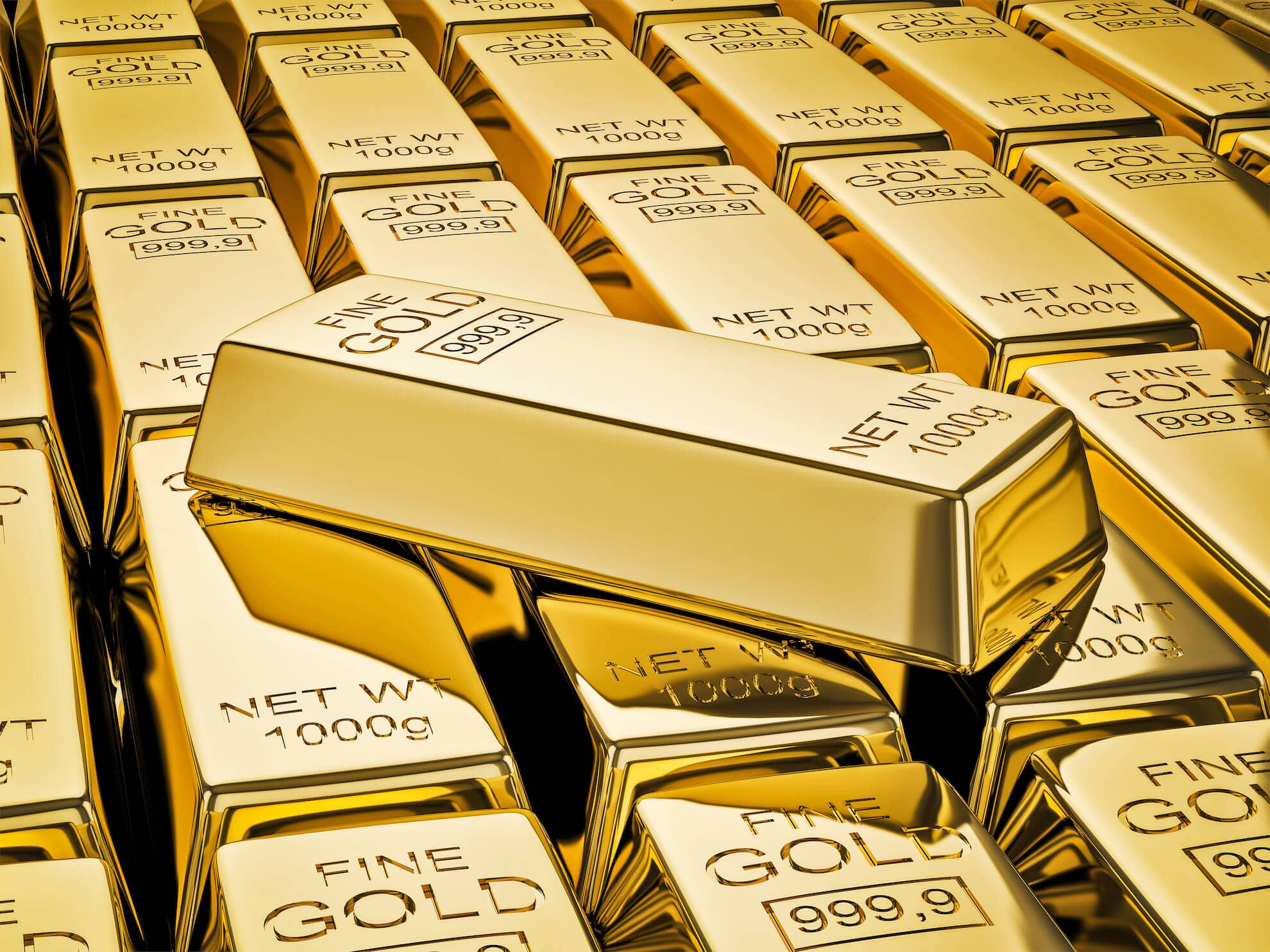
Gold Crosses $3,000 for the First Time: What’s Driving the Rally?
Introduction
Gold has once again proven its reputation as the ultimate safe-haven asset, soaring past the $3,000 per ounce mark for the first time in history. This psychological milestone underscores the growing demand for gold amid economic uncertainty, geopolitical tensions, and shifting monetary policies.
Investors have increasingly turned to gold as inflation fears persist, trade disputes escalate, and global financial markets remain volatile. In 2025 alone, gold has recorded 13 record highs, gaining over 14% in value. But what exactly is driving this unprecedented rally? Let’s explore the key factors behind gold’s historic price surge.
1. Geopolitical Tensions and Trade Wars - Gold Surpasses $3,000
One of the biggest catalysts behind gold’s surge is geopolitical instability. With ongoing trade disputes between the U.S. and Europe, Russia-Ukraine tensions, and conflicts in the Middle East, investors are hedging their bets against potential economic downturns.
Recently, Donald Trump’s proposal for a 200% tariff on European alcohol imports has added further strain to trade relations. As trade wars intensify, investors seek assets that can withstand economic shocks, and gold remains the go-to choice for stability.
How Geopolitical Events Influence Gold Prices
- Market Uncertainty: Investors often flock to gold when financial markets face instability.
- Currency Devaluation: Trade tensions can weaken fiat currencies, making gold a more attractive alternative.
- Inflation Hedge: Gold historically holds its value even when other assets depreciate.
2. Federal Reserve’s Interest Rate Policies
Another crucial factor driving gold’s rally is the U.S. Federal Reserve’s monetary policy. Recently, economic data has suggested that inflation is cooling faster than expected, which could lead to further interest rate cuts.
When interest rates are lowered:
✔️ Gold becomes more attractive as lower yields reduce the opportunity cost of holding non-interest-bearing assets.
✔️ The U.S. dollar weakens, making gold cheaper for foreign investors.
With the Fed’s next policy meeting scheduled for Wednesday, analysts widely expect the central bank to keep rates steady. However, any hints of future cuts could further propel gold prices.
3. The Role of Gold ETFs in Price Movements
Institutional investors and hedge funds have also played a significant role in gold’s price surge. SPDR Gold Trust (GLD), the world’s largest gold-backed exchange-traded fund (ETF), has reported its highest holdings since August 2023.
Why Are ETFs Important?
- Increased Buying Activity: When large funds buy gold-backed ETFs, demand rises, pushing prices higher.
- Market Sentiment: Rising ETF holdings signal bullish sentiment among institutional investors.
- Liquidity and Accessibility: Gold ETFs make it easier for investors to gain exposure to gold without physically owning the metal.
4. Demand from Central Banks and Retail Investors
Governments and central banks have been stockpiling gold at record levels in recent years. Countries like China, India, and Russia have significantly increased their gold reserves as a hedge against economic uncertainty.
At the same time, retail investors are also flocking to gold as a long-term investment, driven by concerns over:
- Stock market volatility
- Inflation and currency depreciation
- Potential banking crises
With gold demand rising across institutional, government, and retail segments, the metal’s price is seeing sustained upward momentum.
5. Profit-Taking Could Lead to Short-Term Pullbacks
Despite gold’s impressive rally, profit-taking by short-term traders could temporarily slow down its momentum.
A leading precious metals trader at Heraeus Metals Germany stated:"As gold surpasses the $3,000 mark, short-term profit-taking could put temporary pressure on the price."
This means that while long-term fundamentals remain strong, short-term volatility is expected. Investors should be prepared for possible price corrections before gold continues its upward trajectory.
6. Is Gold Still a Good Investment in 2025?
With gold prices at all-time highs, many investors are wondering: Is it too late to invest?
The answer depends on individual financial goals. While gold may experience short-term pullbacks, its long-term outlook remains bullish due to:
✔️ Ongoing geopolitical uncertainties
✔️ Potential Federal Reserve rate cuts
✔️ Increased demand from central banks and ETFs
For investors looking for stability and portfolio diversification, gold remains a valuable asset.
7. What Gold Does — and Does Not Do — in a Portfolio
"Safe haven" is a useful shorthand but a poor description of how gold actually behaves, and the gap between the two is where most disappointment comes from.
What gold has historically done is hold purchasing power through episodes in which paper claims came under pressure — currency debasement, sanctions on reserves, banking stress, sharp equity drawdowns. Its diversification value comes from the fact that its price is driven by a different set of forces from those that drive company earnings, so it has often risen when equities fell.
What gold does not do is generate income. There is no coupon, no dividend and no rent. The return comes entirely from the price at which someone else will buy it from you. That has a real cost: every pound held in a zero-yield asset is a pound not earning interest or dividends elsewhere. The way to think about that drag is as an insurance premium. In calm markets it is a cost; the reason for paying it is what happens in the markets that are not calm.
Two further points are often overlooked. First, the diversification is not reliable in the very short term. In an acute liquidity squeeze, investors sell whatever can be sold to raise cash, and gold is highly saleable — so it can fall alongside equities for a period before reasserting itself. Second, an all-time high in nominal terms is not the same thing as an all-time high in real, inflation-adjusted terms, and headlines rarely draw the distinction.
8. The Currency Layer for Investors Who Do Not Earn in Dollars
Gold is quoted in US dollars. That means a sterling, euro or dirham investor holds two exposures, not one: the movement in the metal and the movement in their own currency against the dollar.
The practical consequence is that two investors can buy the same ounce on the same day and record materially different returns. If the dollar weakens against your home currency, part of the gain in the dollar gold price is given back on translation; if it strengthens, your return is flattered by something that has nothing to do with gold. This cuts both ways and is a common source of confusion when an investor's statement does not match the price they see quoted in the financial press.
Some investors use currency-hedged gold products to strip this out; others regard the dollar exposure as part of the point, on the view that they are hedging their own currency as much as they are hedging markets. Neither is right in the abstract. What matters is which currency your future liabilities — school fees, a mortgage, retirement income — are actually denominated in. Our guide to currency risk management for expats sets out how to think about that mismatch.
9. The Ways to Own Gold, Compared
The vehicles listed above behave quite differently from one another, and the choice between them matters more than the timing of the purchase.
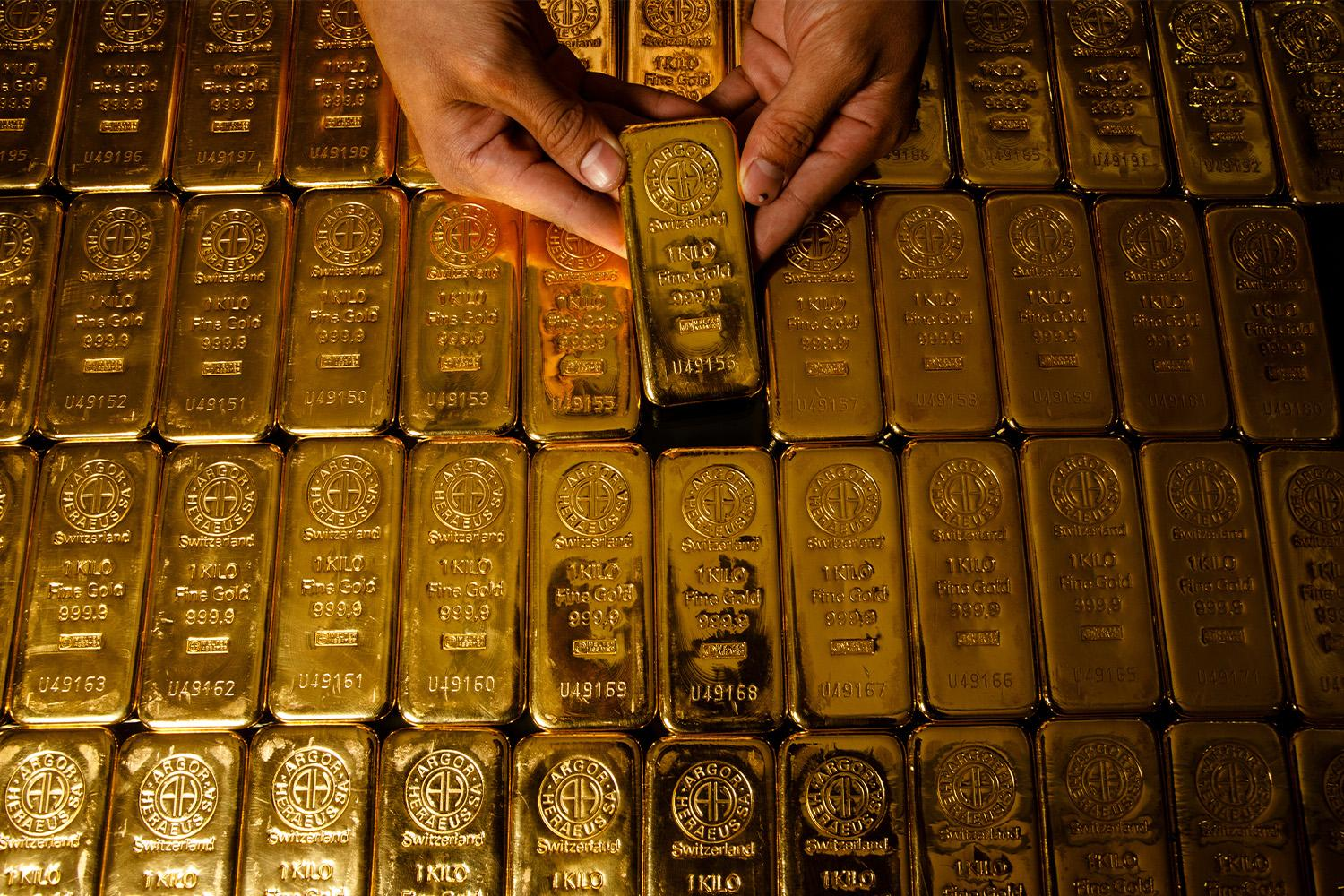
Physically backed exchange-traded funds and commodities are the simplest route for most investors. They are listed securities that hold allocated bars in professional vaults on investors' behalf. They trade like a share, settle like a share, and can usually be held inside a tax wrapper. They are not bank deposits — they are a claim on metal, and the structure, custodian and domicile of the fund are worth reading before you buy.
Physical bullion — coins and bars — appeals to investors who want direct ownership with no intermediary. The trade-off is friction. There is a buy-sell spread that is wider than on a listed fund, there are storage and insurance costs if the holding is any size, and selling means dealing with a dealer rather than pressing a button. Where the metal is stored, and whether it is allocated to you specifically or held on a pooled basis, are the questions that matter.
Gold mining shares are not gold. They are equities whose profits are geared to the gold price, because a large part of a miner's cost base does not move when the metal does. That gearing works in both directions. On top of it sits everything that can go wrong with any company: management, the political risk of the country the mine sits in, reserve depletion, environmental liability and financing. Miners can therefore fall in a rising gold market. Investors who want the hedge rather than the leverage generally take it in metal rather than equity.
Futures and options are professional instruments. They involve leverage, margin calls and expiry dates, and they can lose more than the amount initially committed. They are not a substitute for a long-term holding.
Tax treatment differs sharply between these routes and between jurisdictions — and, in some cases, between one coin and another within the same jurisdiction. This is a question to settle before purchase rather than after, because the choice of vehicle is difficult to unwind cheaply.
10. Sizing the Position, and Knowing What Would End It
Two decisions determine whether a gold holding does the job it was bought for, and neither of them is about the price.
The first is what the allocation is actually for. Insurance against a risk you are genuinely exposed to is a different proposition from a directional view on the metal, and the answer sets both the size and the vehicle. An allocation held as insurance is sized against what it is insuring — the assets and the currency it is meant to offset — and will therefore tend to be modest and stable. A position taken because the price is expected to rise is a trade, and a trade needs an exit. Confusing the two produces a familiar outcome: a holding bought as protection, sized like a bet, and sold shortly before the protection would have mattered.
The second is what would end the position. Settling that before a purchase, rather than in the middle of a drawdown, is the discipline most investors skip. For an insurance allocation the answer is usually a change in circumstances rather than in price — the exposure being hedged has gone, or the portfolio around it has changed shape.
Which leads to the mechanical point that attracts the least attention. An asset producing no income cannot be topped up out of its own yield, so a target allocation is only maintained by rebalancing: trimming after the metal has run, adding after it has lagged. That is uncomfortable in both directions, which is precisely why the target is set in advance rather than in the moment. It also disposes of the question that dominates coverage of a record price. An investor with a target allocation is not deciding whether gold is expensive. They are answering a much narrower question — whether their own holding currently sits above or below where they decided it should be.
A Note on Risk
Gold is a volatile asset that produces no income, and a record price is not a forecast. It can fall sharply and can stay below a previous peak for long periods. Nothing above is a recommendation to buy or sell, or personal advice; the right allocation — including none at all — depends on your objectives, your time horizon, your other assets and your tax position. The value of investments can fall as well as rise and you may get back less than you invested. Past performance is not a guide to future performance.
FAQs About Gold’s $3,000 Milestone
1. Why did gold prices reach $3,000 per ounce?
Gold prices surged past $3,000 due to a mix of geopolitical tensions, Federal Reserve policies, and increased demand from investors and central banks.
2. Is gold expected to continue rising?
Analysts believe that while short-term corrections may occur, the overall trend remains bullish due to continued economic uncertainties and monetary policies supporting gold.
3. How does inflation impact gold prices?
Gold is often seen as a hedge against inflation. When inflation rises, fiat currencies lose purchasing power, making gold more attractive as a store of value.
4. Should I buy gold now, or wait for a price dip?
If investing for the long term, gold remains a solid choice. However, short-term investors may consider waiting for potential dips caused by profit-taking.
5. What are the best ways to invest in gold?
Investors can gain exposure to gold through:
- Physical gold (bars, coins, jewelry)
- Gold ETFs like SPDR Gold Trust (GLD)
- Gold mining stocks
- Gold futures and options
6. How does a weak U.S. dollar affect gold?
A weaker dollar makes gold cheaper for foreign buyers, increasing demand and driving prices higher.
The Future of Gold Beyond $3,000
Gold’s historic rise past $3,000 per ounce highlights its importance as a safe-haven asset in times of economic uncertainty. With geopolitical tensions, monetary policy shifts, and rising investor demand, gold is likely to remain a key part of investment portfolios in 2025 and beyond.
While short-term fluctuations may occur due to profit-taking, the long-term outlook for gold remains bullish. For investors seeking stability, wealth preservation, and diversification, gold continues to shine as a valuable asset in an unpredictable world.
👉 Looking for expert guidance on international financial planning and investment strategies? Contact Global Investments today and let our experts help you navigate the evolving market landscape.
This article is for general information only and does not constitute financial, legal or tax advice, a personal recommendation, or an offer to buy or sell any investment. Rules, prices and regulations change; verify current requirements with a qualified adviser before acting.