

In the digital age, where cryptocurrency gains traction daily, the shadow of scams grows darker, particularly on platforms like Binance and through services like Trust Wallet. My recent experience sheds light on a sophisticated DeFi Liquidity Mining scam cloaked as a training group on WhatsApp for Binance users, revealing a global threat that every digital investor should be aware of.

The Setup: An Exclusive WhatsApp Group
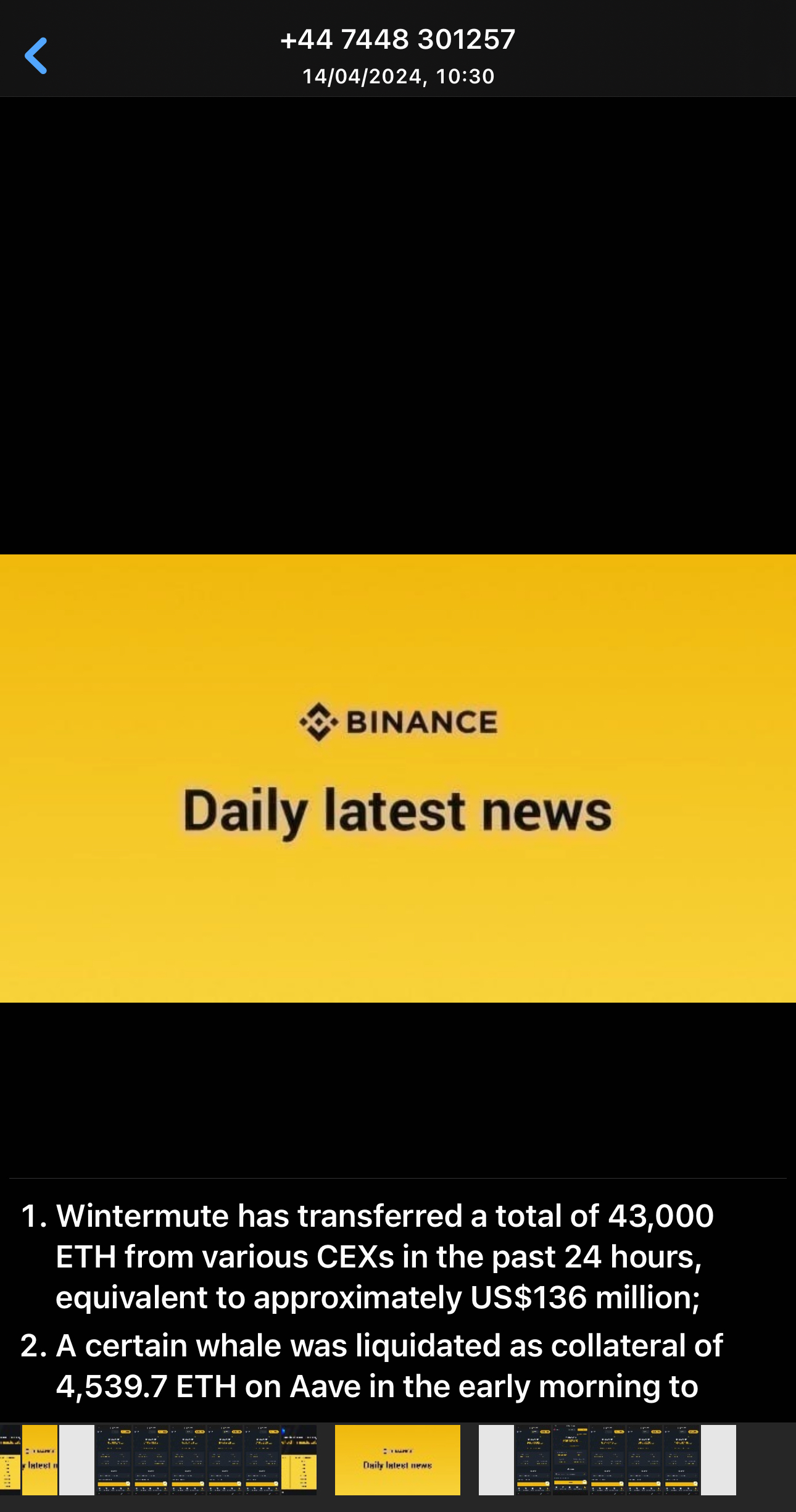
It began innocently enough with an invitation to an exclusive WhatsApp group allegedly for Binance account holders interested in cryptocurrency trading. Led by a so-called analyst named Bob, the group promised free training from finance analysts. Members received daily updates on crypto news and shared their insights, creating an active community. However, it soon became clear that something was amiss. Many responses felt scripted, and certain members (likely collaborators) were overly enthusiastic about the analysts' reports.
The Operation: Daily Discussions and Strategic Silence
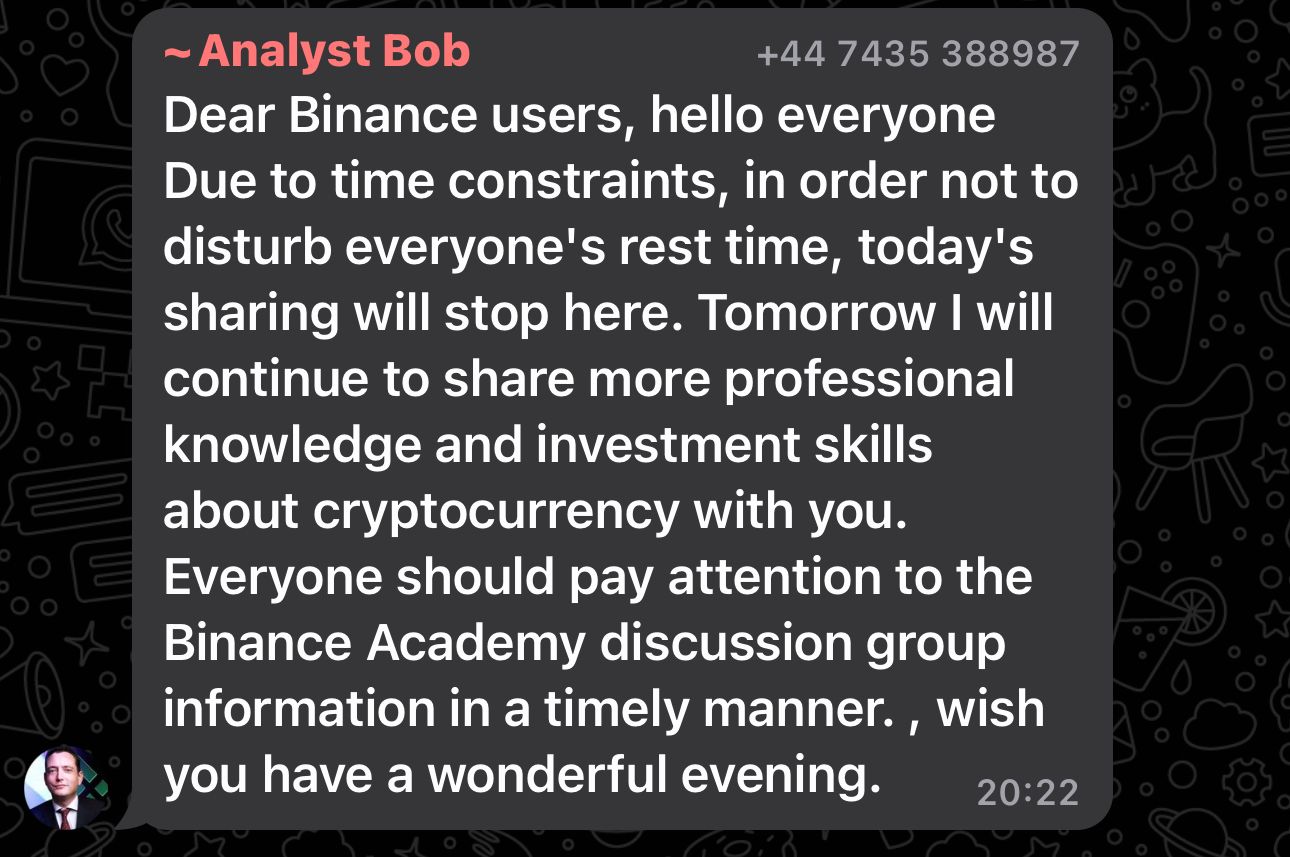
Activity in the group was vibrant, with constant discussions throughout the day. Yet, suspiciously, all chats paused overnight. This break was likely used by the administrators to monitor conversations and quickly remove any dissent or suspicion voiced by the members, maintaining a controlled environment conducive to their scheme.
The Transition: Moving Targets
After observing quietly for weeks, I noticed a pattern. Members, including myself, were periodically shifted to different groups, each time greeted by the same analyst, Bob, and an assistant named Laila, who were the consistent administrators. Interestingly, the groups were initially set up with phone numbers from Pakistan and Latin America, which were soon replaced by UK-based contacts—a tactic perhaps meant to lend credibility or confuse participants.

The Pitch: The Lure of DeFi Liquidity Mining - Introducing the Scam
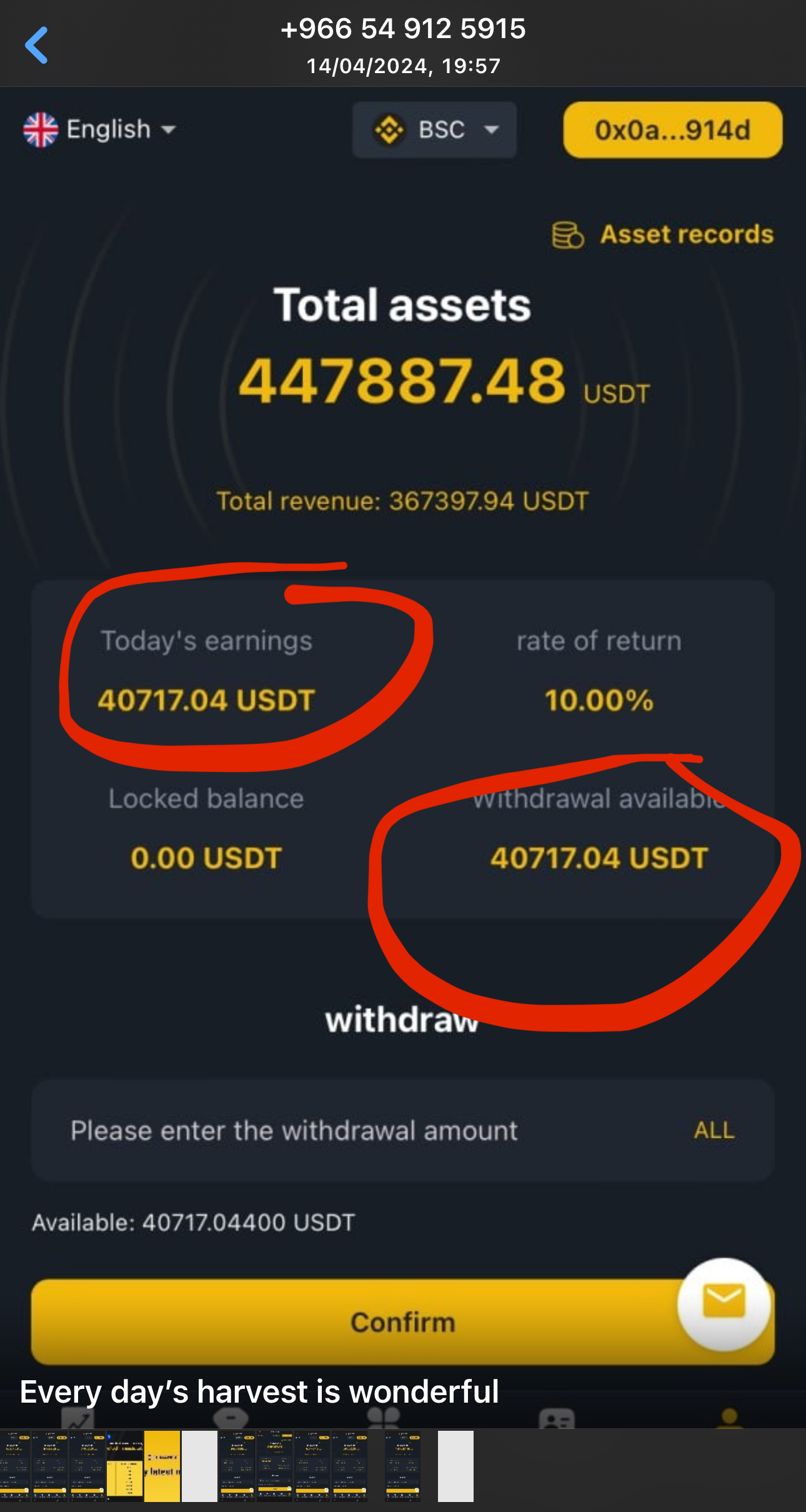
The scam's true nature revealed itself deeper into the engagement. Members were enticed by the prospect of investing in DeFi Liquidity Mining, promised implausibly high returns ranging from 1 to 10% daily depending on funding levels, as well as additional rewards. By afternoon, co-conspirators posing as successful investors would share screenshots of their supposed profits, baiting real members.
\The Trap: Linking Wallets to the Scammers' Account
The climax of this scam involved members being urged to engage in private chats with the assistant, who provided detailed instructions to link their wallets to the scam operation. This allowed the scammers to directly access and drain funds from victims' wallets.
Above: Shows the screenshots provided by the scammer to show the user how to connect their Trust Wallet account to the scammer's so they can steal funds.
A Shocking Discovery and Inadequate Response
What was particularly alarming was not just the number of co-conspirators but the sophistication in using legitimate-seeming cryptocurrency wallets and transactions to perpetrate the fraud. Despite reporting this to Binance and Trust Wallet, the operation continued unabated for weeks, highlighting a disturbing lack of urgency from these platforms in tackling such scams.
Conclusion: A Warning to All
This ordeal underlines the critical need for vigilance in the crypto space due to the lack of regulatory oversight, anonymity of users, and the technical complexity of exchange functionality. The promise of high returns should always be met with skepticism, as the reality of achieving such profits daily is fundamentally unsustainable.
**To simplify things numerically, let me put it this way... If an investor invested $1 and earned 10% per day compounded, they would be a billionaire in just over 200 days and worth more than the entire value of the cryptocurrency market in a year! **
Potential investors must stay informed and cautious, as these scams are not just isolated incidents but part of a larger, ongoing global issue that preys on the uninformed and optimistic.
In summary, always research thoroughly, question everything, and never let the allure of quick gains cloud your judgment. The world of cryptocurrency, while offering genuine opportunities, is also fraught with risks that require a discerning and cautious approach.
Why the Wallet Connection Is the Moment Everything Is Lost
Everything that came before — the group, the analysts, the daily commentary, the screenshots of profits — exists to get to one step. The victim is not persuaded to send money to a scammer. The victim is persuaded to grant the scammer permission over their own wallet.
That distinction matters, because it explains why the loss looks so different from a conventional theft. Nothing is broken into. The transfers that follow are made with the victim's own credentials and appear, on the chain, entirely legitimate. There is no bank to call, no chargeback to request and no central party with the ability to unwind what has happened: once a transaction is recorded on-chain it is irreversible, and loss through error or theft is irreversible with it.
It also explains why the instructions arrive in a private message rather than in the group. The group manufactures the belief; the private chat performs the act. Any time a conversation moves from a public channel to a one-to-one message in order to walk you through a technical step, treat that transition itself as the warning.
The Structure Behind the Story
Strip out the specifics and the same architecture appears in most versions of this fraud.
- Recruitment. An unsolicited invitation into a group with a plausible affiliation to a well-known platform. Nobody asks for money.
- Authority. A named "analyst" delivers daily market commentary. Much of it is accurate and freely available, which is what makes it convincing.
- Social proof. Accomplices posing as ordinary members post gains, ask helpful questions and thank the analyst. The genuine members supply the credibility; the accomplices supply the direction.
- Control of the environment. Doubt is removed. Members who ask sceptical questions are quietly ejected, so the remaining participants see only agreement.
- Rotation. Members are moved between groups, and contact numbers change. This frustrates reporting, breaks up any group memory, and lets the operation shed anyone who has become a problem.
- The pitch. A mechanism complicated enough that most people will not interrogate it, attached to a return schedule that no legitimate market produces.
- The private step. A one-to-one conversation in which the victim is talked through granting access.
Recognising the shape is more useful than memorising the details, because the details change with each iteration while the structure does not.
What No Legitimate Firm Will Ever Do
No legitimate firm or adviser will do any of the following. Any one of them should end the conversation:
- Approach you unsolicited about an investment opportunity.
- Guarantee a return. Investments can fall in value; a guaranteed return is a hallmark of fraud.
- Press you to act quickly. Genuine opportunities do not expire within hours.
- Ask you to keep the arrangement from your bank, your adviser or your family.
- Rely on a structure you cannot understand or verify independently.
- Ask to be paid in cryptocurrency or by another unusual method.
- Be untraceable on the relevant regulator's register.
- Ask you to connect a wallet, share a recovery phrase, or install software so that someone can "help" you.
The last of these has no legitimate counterpart at all. A recovery phrase is the wallet. Nobody who needs it is helping you.
Check Before You Engage, Not After
Verification takes minutes and has to happen before any money or access moves.
In the UK, the Financial Conduct Authority maintains a public register of authorised firms, and the critical step is not simply finding the name — it is comparing the contact details on the register with the contact details you have been given. Cloned firms borrow a genuine firm's identity and substitute their own phone number, email address and website. If the details do not match, stop.
For a platform used to buy, hold or trade crypto assets, check whether it appears on the FCA's crypto register. Assets held on unregistered platforms carry no recourse through the Financial Ombudsman Service or the Financial Services Compensation Scheme. For firms based outside the UK, check the equivalent register in the relevant jurisdiction. And note that a firm being registered somewhere does not make an individual claiming to represent it genuine — verify the person through the firm's own published contact details, never through the ones they gave you.
If You Have Already Connected a Wallet
Act on the assumption that any wallet you have granted access to is compromised.
- Stop. Send nothing further, no matter what you are told about releasing, unlocking or unfreezing funds already lost.
- Move what remains. Transfer any remaining assets to a wallet created fresh, on a device you trust, with credentials the other party has never seen.
- Withdraw the permissions you granted, where the platform allows it — and do not rely on that alone, since a new wallet is the safer course.
- Preserve the evidence. Screenshot the groups, the private messages, the phone numbers and the transaction records before anything is deleted. Operations of this kind disappear quickly.
- Report it. In the UK, to Action Fraud as the national fraud reporting centre and to the FCA where a firm appears to be acting without authorisation, as well as to the platform involved. Elsewhere, to the equivalent national body.
- Tell your bank if any payment route touched a bank account, and put it in writing.
Understand that recovery is unlikely. Reimbursement arrangements that apply to bank transfers within a domestic system generally do not extend to cryptocurrency payments or to transfers abroad, and compensation schemes protect against the failure of an authorised firm rather than against fraud. This is precisely why prevention carries so much more weight in this area than remedy.
The Second Fraud
Anyone who has lost money to a scheme like this should expect to be approached again, this time by someone offering to recover it. These "recovery" services are, in a high proportion of cases, the same category of fraud aimed at the same victim, on the reasonable assumption that a person who has already lost money will pay to get it back.
Do not pay an upfront fee to a recovery agent or law firm that has approached you. Report the loss through the official channels instead, and take advice from a regulated professional you have identified yourself.
The Underlying Lesson
The arithmetic in this article is the most useful part of it. A return that compounds at the rates being promised would, within a year, exceed the value of the entire market it claims to operate in. That is not an argument about this particular scheme; it is a test you can apply to any of them. Where a return is far above what the market produces, the money has to be coming from somewhere, and if the source is not disclosed and verifiable, the safest assumption is that it is coming from other participants.
Sophistication is not the defence people imagine it to be. The victims of these operations are frequently intelligent, financially literate and quite capable of spotting a crude approach. What defeats them is patience: weeks of ordinary, accurate, unthreatening conversation, and a request that arrives only once trust has been established. The defence is procedural rather than intuitive — verify the firm, refuse the private walkthrough, never surrender wallet access, and take advice from someone you found yourself.
Don't get sucked into investment scams. Stay informed, invest in regulated financial securities, and consult appropriately qualified professionals for investment advice.

As the Managing Director of Global Investments, I bring 25+ years of expertise in finance, wealth management, and real estate. I specialize in portfolio diversification, deal structuring, and wealth preservation, delivering data-driven strategies for sustainable success in global markets.
This article is for general information only and does not constitute financial, legal or tax advice, a personal recommendation, or an offer to buy or sell any investment. Rules, prices and regulations change; verify current requirements with a qualified adviser before acting.