
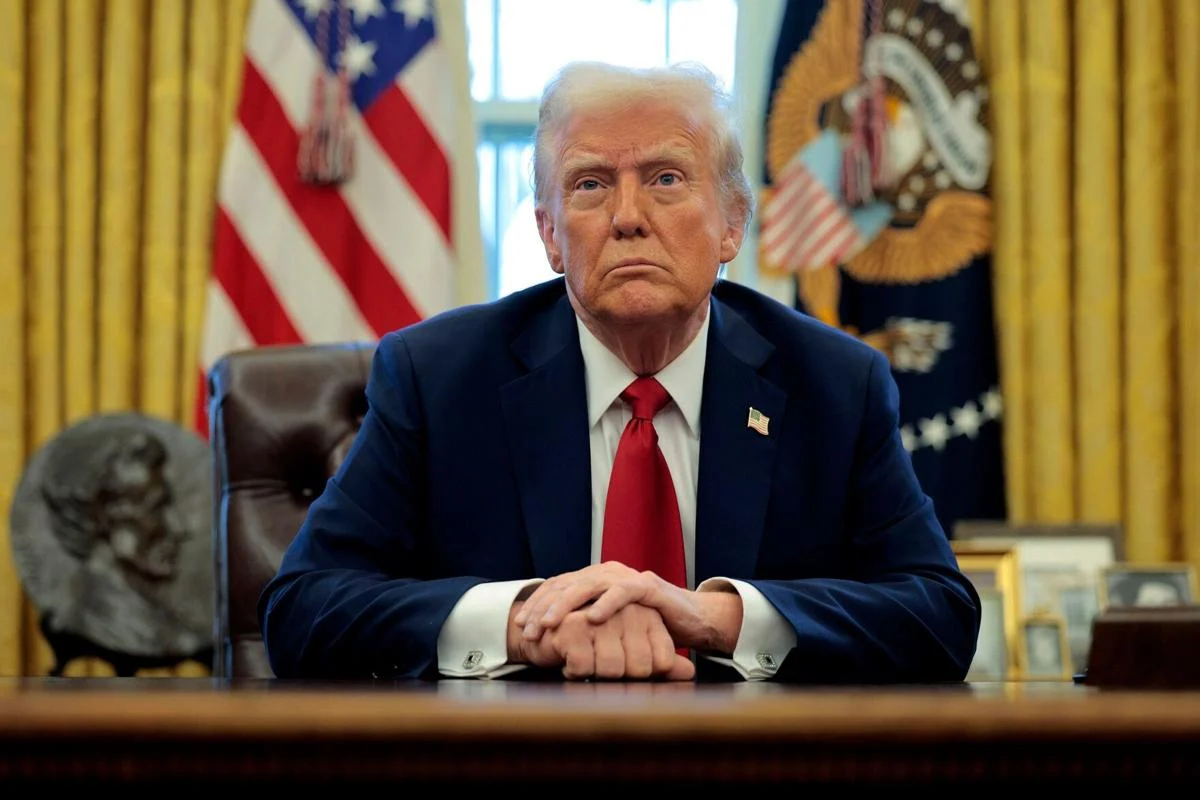
It’s the same scary movie playing out with different actors.
The market panic. The headlines. The sell-off. The doomsday predictions. And then—almost like clockwork—the rebound.
Only this time, the leading man is Donald Trump, and the monster lurking in the dark isn’t inflation or a banking crisis… it’s a tsunami of tariffs.
Welcome to the Trump Slump.
Let’s set the scene...
The Plot: How a Horror Movie Becomes a Market Cycle
We’ve all seen it before.
Act 1 – The Scary Macro Event
This time, it’s the sudden return of Donald Trump, his finger hovering over the tariff button. In a matter of days, the U.S. has announced sweeping trade barriers on imports.
Spoiler Alert! Let’s take a peek at Trump's chart of tariffs...
This is the table of 'reciprocal tariffs' displayed at Trump's announcement. 'Tariffs charged to the USA' are Trump-defined and 'include currency manipulation and trade barriers'
| Country | New US tariffs, % | 'Tariffs charged to the USA' |
|---|---|---|
| China | 34 | 67 |
| European Union | 20 | 39 |
| Vietnam | 46 | 90 |
| Taiwan | 32 | 64 |
| Japan | 24 | 46 |
| India | 26 | 52 |
| South Korea | 25 | 50 |
| Thailand | 36 | 72 |
| Switzerland | 31 | 61 |
| Indonesia | 32 | 64 |
| Malaysia | 24 | 47 |
| Cambodia | 49 | 97 |
| United Kingdom | 10 | 10 |
| South Africa | 30 | 60 |
| Brazil | 10 | 10 |
| Bangladesh | 37 | 74 |
| Singapore | 10 | 10 |
| Israel | 17 | 33 |
| Philippines | 17 | 34 |
| Chile | 10 | 10 |
| Australia | 10 | 10 |
| Pakistan | 29 | 58 |
| Turkey | 10 | 10 |
| Sri Lanka | 44 | 88 |
| Colombia | 10 | 10 |
| Peru | 10 | 10 |
| Nicaragua | 18 | 36 |
| Norway | 15 | 30 |
| Costa Rica | 10 | 17 |
| Jordan | 20 | 40 |
| Dominican Republic | 10 | 10 |
| United Arab Emirates | 10 | 10 |
| New Zealand | 10 | 20 |
| Argentina | 10 | 10 |
| Ecuador | 10 | 12 |
| Guatemala | 10 | 10 |
| Honduras | 10 | 10 |
| Madagascar | 47 | 93 |
| Myanmar | 44 | 88 |
| Tunisia | 28 | 55 |
| Kazakhstan | 27 | 54 |
| Serbia | 37 | 74 |
| Egypt | 10 | 10 |
| Saudi Arabia | 10 | 10 |
| El Salvador | 10 | 10 |
| Côte d’Ivoire | 21 | 41 |
| Laos | 48 | 95 |
| Botswana | 37 | 74 |
| Trinidad and Tobago | 10 | 12 |
| Morocco | 10 | 10 |
| Algeria | 30 | 59 |
| Oman | 10 | 10 |
| Uruguay | 10 | 10 |
| Bahamas | 10 | 10 |
| Lesotho | 50 | 99 |
| Ukraine | 10 | 10 |
| Bahrain | 10 | 10 |
| Qatar | 10 | 10 |
| Mauritius | 40 | 80 |
| Fiji | 32 | 63 |
| Iceland | 10 | 10 |
| Kenya | 10 | 10 |
| Liechtenstein | 37 | 73 |
| Guyana | 38 | 76 |
| Haiti | 10 | 10 |
| Bosnia and Herzegovina | 35 | 70 |
| Nigeria | 14 | 27 |
| Namibia | 21 | 42 |
| Brunei | 24 | 47 |
| Bolivia | 10 | 20 |
| Panama | 10 | 10 |
| Venezuela | 15 | 29 |
| North Macedonia | 33 | 65 |
| Ethiopia | 10 | 10 |
| Ghana | 10 | 17 |
| Moldova | 31 | 61 |
| Angola | 32 | 63 |
| Democratic Republic of the Congo | 11 | 22 |
| Jamaica | 10 | 10 |
| Mozambique | 16 | 31 |
| Paraguay | 10 | 10 |
| Zambia | 17 | 33 |
| Lebanon | 10 | 10 |
| Tanzania | 10 | 10 |
| Iraq | 39 | 78 |
| Georgia | 10 | 10 |
| Senegal | 10 | 10 |
| Azerbaijan | 10 | 10 |
| Cameroon | 11 | 22 |
| Uganda | 10 | 20 |
| Albania | 10 | 10 |
| Armenia | 10 | 10 |
| Nepal | 10 | 10 |
| Sint Maarten | 10 | 10 |
| Falkland Islands | 41 | 82 |
| Gabon | 10 | 10 |
| Kuwait | 10 | 10 |
| Togo | 10 | 10 |
| Suriname | 10 | 10 |
| Belize | 10 | 10 |
| Papua New Guinea | 10 | 15 |
| Malawi | 17 | 34 |
| Liberia | 10 | 10 |
| British Virgin Islands | 10 | 10 |
| Afghanistan | 10 | 49 |
| Zimbabwe | 18 | 35 |
| Benin | 10 | 10 |
| Barbados | 10 | 10 |
| Monaco | 10 | 10 |
| Syria | 41 | 81 |
| Uzbekistan | 10 | 10 |
| Republic of the Congo | 10 | 10 |
| Djibouti | 10 | 10 |
| French Polynesia | 10 | 10 |
| Cayman Islands | 10 | 10 |
| Kosovo | 10 | 10 |
| Curaçao | 10 | 10 |
| Vanuatu | 22 | 44 |
| Rwanda | 10 | 10 |
| Sierra Leone | 10 | 10 |
| Mongolia | 10 | 10 |
| San Marino | 10 | 10 |
| Antigua and Barbuda | 10 | 10 |
| Bermuda | 10 | 10 |
| Eswatini | 10 | 10 |
| Marshall Islands | 10 | 10 |
| Saint Pierre and Miquelon | 10 | 10 |
| Saint Kitts and Nevis | 10 | 10 |
| Turkmenistan | 10 | 10 |
| Grenada | 10 | 10 |
| Sudan | 10 | 10 |
| Turks and Caicos Islands | 10 | 10 |
| Aruba | 10 | 10 |
| Montenegro | 10 | 10 |
| Saint Helena | 10 | 15 |
| Kyrgyzstan | 10 | 10 |
| Yemen | 10 | 10 |
| Saint Vincent and the Grenadines | 10 | 10 |
| Niger | 10 | 10 |
| Saint Lucia | 10 | 10 |
| Nauru | 30 | 59 |
| Equatorial Guinea | 13 | 25 |
| Iran | 10 | 10 |
| Libya | 31 | 61 |
| Samoa | 10 | 10 |
| Guinea | 10 | 10 |
| Timor-Leste | 10 | 10 |
| Montserrat | 10 | 10 |
| Chad | 13 | 26 |
| Mali | 10 | 10 |
| Maldives | 10 | 10 |
| Tajikistan | 10 | 10 |
| Cabo Verde | 10 | 10 |
| Burundi | 10 | 10 |
| Guadeloupe | 10 | 10 |
| Bhutan | 10 | 10 |
| Martinique | 10 | 10 |
| Tonga | 10 | 10 |
| Mauritania | 10 | 10 |
| Dominica | 10 | 10 |
| Micronesia | 10 | 10 |
| Gambia | 10 | 10 |
| French Guiana | 10 | 10 |
| Christmas Island | 10 | 10 |
| Andorra | 10 | 10 |
| Central African Republic | 10 | 10 |
| Solomon Islands | 10 | 10 |
| Mayotte | 10 | 10 |
| Anguilla | 10 | 10 |
| Cocos (Keeling) Islands | 10 | 10 |
| Eritrea | 10 | 10 |
| Cook Islands | 10 | 10 |
| South Sudan | 10 | 10 |
| Comoros | 10 | 10 |
| Kiribati | 10 | 10 |
| São Tomé and Príncipe | 10 | 10 |
| Norfolk Island | 10 | 10 |
| Gibraltar | 10 | 10 |
| Tuvalu | 10 | 10 |
| British Indian Ocean Territory | 10 | 10 |
| Tokelau | 10 | 10 |
| Guinea-Bissau | 10 | 10 |
| Svalbard and Jan Mayen | 10 | 10 |
| Heard and McDonald Islands | 10 | 10 |
| Réunion | 10 | 10 |
Credit: The Guardian - Source: White House. Updated on 7 April 2025.
Markets hate uncertainty. Investors hate intervention. And when the world’s largest consumer economy starts walling itself off with tariffs, everyone starts thinking: is this 1930s protectionism all over again?
Cue the panic.
Act 2 – The Market Sell-Off
It didn’t take long.
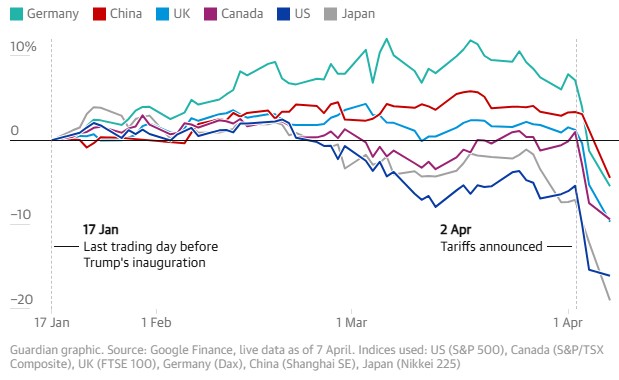
Global equity markets dipped hard. Risk assets sold off across the board. Currencies of export-heavy nations slid. Commodities priced in dollars weakened. The Dow, S&P, FTSE, DAX, Nikkei—all turned red.
Investors pulled their cash to the sidelines, fearing a global slowdown. After all, tariffs don’t just hurt exporters—they raise costs for importers, slow down supply chains, and pinch consumers everywhere.
And yet… the panic felt familiar.
Act 3 – "This Time Is Different!"
Suddenly, the doomsayers come out in full force.
“This time is different!” “It’s the end of globalization!” “The U.S. is de-dollarizing itself!” “China will retaliate! This will spiral!”
All fair points on the surface. But if you’ve been around the block a few times, you know this tune. Every panic, every shock, has its choir of Chicken Littles.
And just like always, the people who swore they’d “buy the dip” when it came now stand frozen. Paralyzed by fear. They don’t buy. They can’t buy. The red candles on the screen are too scary.
But the market doesn’t wait for fear to subside.
Act 4 – Sentiment Shifts. Markets Rebound.
Before you can say “recession,” the tide turns.
A softer tone from central banks. Muted retaliation from China. A better-than-expected jobs report. Some high-profile bargain hunters start buying again.
And just like that, the rebound begins!
People are stunned. “But… but… we were headed for disaster!” No. We were headed for a recalibration. Markets digest news fast. Then they move on.
The scary movie is halfway through—and the villain never quite lives up to the hype.
Act 5 – Prices Are Too High Again
Suddenly, everyone wants in.
Too late.
Now they’re saying, “I should have bought the dip.” But the rebound is already in full swing, and buying now feels expensive.
Ironically, the same people who screamed “global collapse” two weeks ago are now arguing that markets are “disconnected from reality.” Really? Or are they just mad that the world didn’t end long enough for them to time it right?
Act 6 – Prepare for the Sequel
This isn’t the end.
There’s always a sequel.
Another scary macro event. Another round of panic. Another market correction. Another rebound. The cycle is as old as Wall Street itself.
This one is just called: The Trump Slump.
So, What Exactly Happened?
Let’s zoom in.
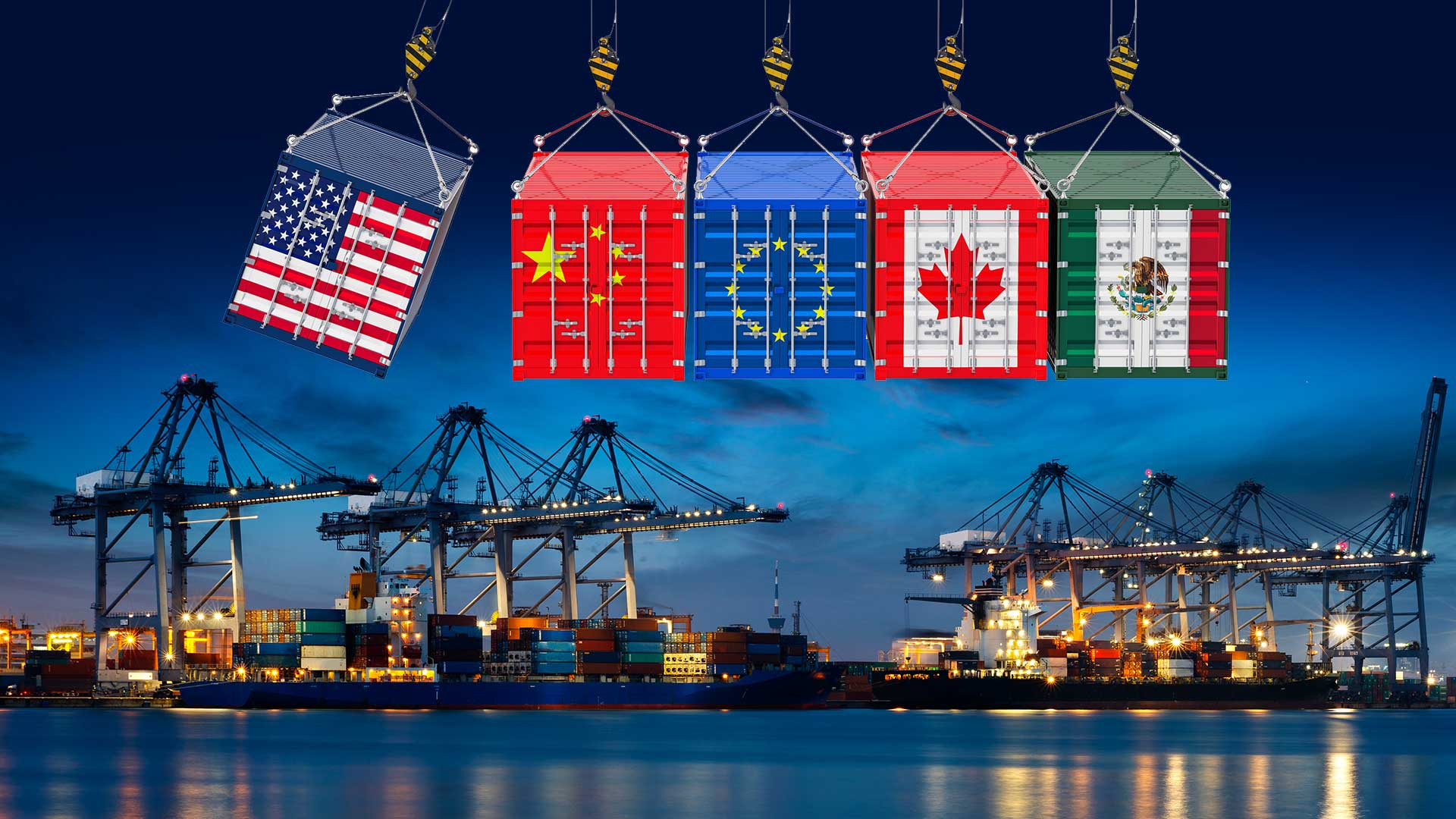
Trump’s tariffs aren’t symbolic—they’re sweeping.
Investors responded predictably. Risk-off sentiment surged. Capital fled emerging markets. The Dollar tanked. The fear was—and still is—that this could spiral into a tit-for-tat tariff war that triggers global contraction.
But let’s be clear: this isn’t 2008. It’s not even 2020.
This is a trade war. And trade wars move slower, bite softer, and often produce political theatre rather than true economic implosion—at least initially.
Trump’s Real Strategy: Bully Economics
Let’s call a spade a spade.
This isn’t economic policy. It’s economic intimidation.
Trump’s tariff approach is just an evolution of America’s old playbook: use whatever force necessary—military or economic—to coerce favorable trade terms. He’s not interested in diplomacy. He’s not interested in compromise. He wants leverage.
And in his eyes, tariffs are a win-win:
- They appeal to his voter base by “defending American jobs.”
- They create a negotiation chip he can use to extract concessions.
- And they avoid the mess of war—cheaper, bloodless, headline-grabbing.
In short: it’s political genius. But economically?
It’s reckless.
Because Trump has forgotten one very big piece of the puzzle...
Debt. Dollar. Demand.
America doesn’t dominate the world because it makes the cheapest goods or sells the most oil. It dominates because it’s the biggest consumer economy—and because the dollar is the world’s reserve currency.
But that privilege rests on one thing: trust.
Trust that the U.S. will pay its debts. Trust that it won’t abuse its monetary power. Trust that the dollar is a safe haven—not a weapon.
Tariffs, when overused, chip away at that trust. They tell global partners: “We’ll take what we want, and you’ll like it.”
But here’s the twist: America’s power to bully is only sustainable while the world keeps lending it money. And right now, the U.S. sits atop $36 trillion in national debt—and rising. That's 124% of the country's GDP. Japan is the largest foreign holder of U.S. debt, with over $1 trillion, followed by China ($759 billion) and the United Kingdom ($723 billion).
If global creditors start to see America as unstable, unpredictable, or aggressive, they may start to reduce exposure to U.S. treasuries. They might move reserves into gold, the euro, or even yuan. That weakens the dollar and increases America’s cost of borrowing.
In other words, tariffs might buy Trump a headline today—but they could cost the U.S. its financial empire tomorrow.
Inflation, Recession, or Reset?
There’s also the inflation angle.
Tariffs raise import costs. U.S. manufacturers, reliant on foreign inputs, pass those costs to consumers. And just like that, you get sticky inflation in an economy already grappling with high rates and softening demand.
If the Fed cuts rates to offset the damage, they risk a resurgence in inflation.
If they hold rates steady, they risk tipping the economy into recession.
It’s a policy nightmare—created not by fundamentals, but by a political stunt.
The Trump Slump Final Thoughts: Should You Be Scared?
The Trump Slump is real.
Markets have taken a hit. Volatility is back. Portfolios are wobbling. The headlines are blaring.
But here’s the truth: this movie always ends the same way. Corrections are normal. Panic is temporary. Long-term investors who can filter the noise and spot the opportunity always win. The wealthy buy the dip and come out richer and the saga continues.
So here’s the play:
- If you're an investor: don’t panic. The scariest scenes always precede the rebound.
- If you're sitting on cash: this is the dip you were waiting for.
- If you’re already in the market: ride it out. The sequel is always coming—but so is the recovery.
And for those watching Trump set fire to the trade rulebook?
Remember this: tariffs might be a less violent form of coercion—but they’re still coercion. And history has a way of catching up with bullies, whether they wear a uniform or a suit.
Rating: Scary in the short-term. Predictable in the long run.
Verdict: The Trump Slump is a plot twist—not the final scene.
This article is for general information only and does not constitute financial, legal or tax advice, a personal recommendation, or an offer to buy or sell any investment. Rules, prices and regulations change; verify current requirements with a qualified adviser before acting.